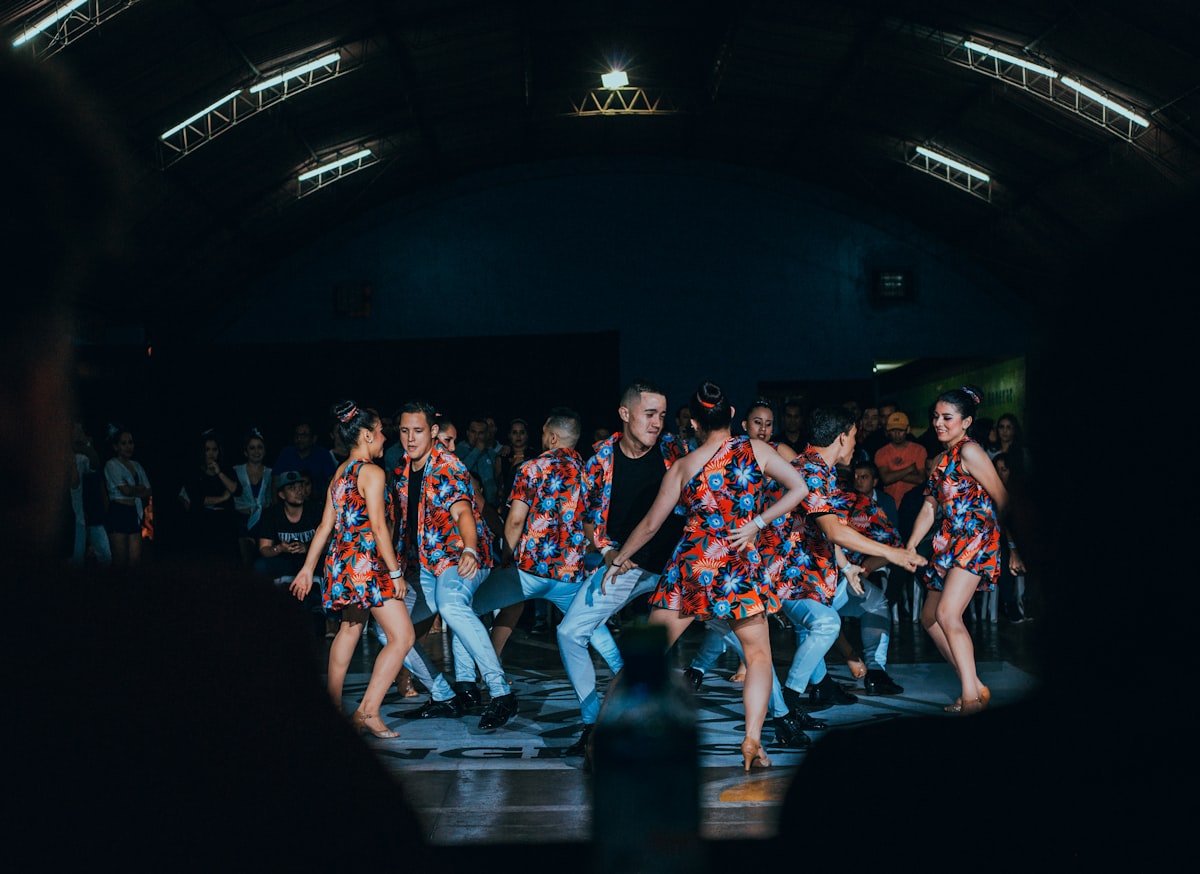
If you have ever been to a Caribbean music event and watched two people dance with that slow, close, impossibly graceful movement that seems to exist somewhere between dance and conversation — that was Gouyad.
One of the most distinctive and emotionally expressive partner dances in Caribbean culture, Gouyad is the dance form associated with Kompa Gouyad music, and it has developed its own global following among dancers who seek partner dance styles that prioritize connection, expression, and authentic cultural depth over technical showmanship.
This guide covers everything you need to know about Gouyad dance: its origins, how it differs from other Caribbean partner dances, what makes it special as a dance form, and how to find the music that makes it come alive.
Whether you are a curious newcomer or a dancer looking to deepen your understanding, this is your complete introduction.

The Origins of Gouyad Dance
To understand Gouyad dance, you need to understand where it comes from — and that means starting with Haiti.
Kompa, the parent genre of Kompa Gouyad, was created in Haiti in 1955 and quickly became the defining popular music of the island and its diaspora. The original Kompa Direct style — up-tempo, band-driven, with an electric, festival energy — was associated with a more upbeat partner dance style.
But as the 1980s and 1990s progressed, a slower, more intimate variant of the music began to emerge, and with it, a dance form that matched its emotional register.
The word “gouyad” comes from Haitian Creole and refers to a swaying, winding motion of the hips — a movement that is both deeply rooted in African diaspora dance traditions and distinctly Caribbean in its expression.
As Kompa Gouyad music became more popular, the dance style associated with it evolved into a recognized form in its own right, with characteristic techniques, aesthetics, and a community of practitioners who refined and transmitted it across generations and geographies.
The Haitian diaspora communities in Miami, New York, Montréal, Paris, and across the French-speaking world played a crucial role in spreading Gouyad dance beyond Haiti.
Caribbean music events in these cities became the laboratories where the dance form developed its contemporary character — absorbing influences from Latin partner dance traditions while maintaining its distinctly Haitian rhythmic and emotional core.
The Style and Technique of Gouyad
Gouyad is a close-partner dance — meaning the two dancers maintain a close physical connection throughout the dance. This connection is the foundation from which all expression flows. Here is how the dance works at a technical level.
The connection. In Gouyad, partners dance in close embrace — typically with one partner’s hand on the other’s waist and the other hands clasped or resting on shoulders. The connection between partners is maintained through the torso and hips rather than through arm tension, which gives the dance its characteristic fluid, conversational quality.
The movement. Gouyad’s signature movement is a continuous, rolling hip motion — the gouyad itself — that follows the rhythmic pulse of the music. This is not a percussive, aggressive hip movement but a smooth, rolling wave that travels through the entire lower body.
Good Gouyad dancers make this movement look completely effortless, like the body is simply responding naturally to the music rather than executing a technique.
The lead and follow. Like all partner dances, Gouyad has a lead and follow dynamic. The leader guides the direction and rhythm of the dance through subtle pressure and weight shifts communicated through the connection point, while the follower interprets and embellishes these signals with their own expression.
The best Gouyad partnerships feel like a conversation rather than a performance — both partners contributing equally to the shared experience.
The musical relationship. Gouyad is deeply musical in a way that not all partner dances achieve. The best Gouyad dancers are listening as much as they are moving — responding to musical phrases, ornaments, and dynamics with corresponding adjustments in their movement.
A musician’s note bending or a vocal phrase’s emotional peak might translate into a pause, a deepening of movement, or a subtle change in connection quality. This musical responsiveness is what elevates Gouyad from technically correct to genuinely beautiful.
Watch: Gouyad Dance Playlist on YouTube
The best way to understand Gouyad is to watch it — and to listen to the music that accompanies it. This dedicated Gouyad Dance playlist on the Mandragonbeat network features the tracks that dancers love most, curated to showcase the full emotional range of Kompa Gouyad music.
Listen and Subscribe — Mandragonbeat YouTube Channels
The Mandragonbeat network runs four dedicated YouTube channels covering the full spectrum of Caribbean music. Whether you are into smooth Kompa, high-energy Bouyon, sensual Gouyad, or producer-focused beats, there is a channel built for your taste.
- Kompa Gouyad 971 — The go-to channel for slow, sensual Kompa Gouyad music. Playlists updated regularly with the best Haitian and Caribbean slow jams.
- Mandragon 971 — Original Caribbean music productions, instrumentals, and creative projects from the Mandragonbeat universe.
- MandragonBeat — The main production channel: beats, drum kit showcases, production content, and Caribbean beatmaking culture.
- Bouyon God Beats — Dedicated to Bouyon, Jump Up, and Eastern Caribbean music. The best Bouyon beats and playlists in one place.
Hit subscribe on any (or all) of these channels to stay connected with the best Caribbean music content on YouTube.
How to Start Learning Gouyad Dance
Gouyad is an accessible dance form for beginners, but it rewards patience and dedicated practice more than most partner dance styles. Here is how to approach learning it effectively.
Listen first, dance second. Before you try to learn any steps, spend time listening to Kompa Gouyad music until you can feel the groove in your body without consciously thinking about it. The rolling rhythmic pulse of a Gouyad track should feel like something you want to respond to physically.
If it does not yet feel that way, listen more — the musical understanding is the foundation on which everything else is built.
Find a class or a community. Gouyad is best learned in person, with a teacher who can give you feedback on your connection quality and movement.
Caribbean dance communities in cities with significant Haitian diaspora populations — Miami, New York, Montréal, Paris, Lyon — will have regular social dance events where you can observe and eventually participate. Online tutorials can supplement but should not replace in-person learning for a connection-based partner dance.
Practice the isolated hip movement. The gouyad hip roll can be practiced solo before you attempt it in partnership. Stand with feet hip-width apart, knees slightly bent, and practice initiating a smooth rolling motion from the lower back through the hips.
This isolated practice builds the muscle memory and body awareness that makes the movement look effortless in partnership.
Be patient with the partner connection. Good connection in Gouyad takes time to develop. It requires trust, physical awareness, and the ability to communicate through subtle body signals rather than verbal instruction. The best Gouyad partnerships are built over many hours of dancing together — do not expect partnership comfort to arrive quickly.
FAQ — Gouyad Dance
Q: Is Gouyad hard to learn?
A: Gouyad is accessible for beginners because its basic movement — the rolling hip sway — is intuitive and natural for many people. However, developing the connection quality and musical responsiveness that characterize beautiful Gouyad takes significant practice.
Most dance teachers describe it as easy to start but deeply rewarding to master, with layers of technique and expression that experienced dancers continue to explore indefinitely.
Q: Do I need a partner to learn Gouyad?
A: You can practice the movement quality and musical responsiveness of Gouyad solo, but the dance is fundamentally a partner experience.
Learning with a partner — or attending social dances where you can rotate partners — is essential for developing the connection skills that make Gouyad what it is. Social dance events in Caribbean music communities are the best environment for this kind of learning.
Q: What music should I practice Gouyad to?
A: Any Kompa Gouyad track works for practice, but beginners often find cleaner, more straightforward productions easier to follow when first developing their movement quality. Look for tracks with a clear, consistent rhythmic pulse rather than highly complex arrangements.
The Gouyad Dance playlist embedded above is an excellent starting resource, featuring tracks specifically curated for their danceability.
Conclusion: Let the Music Move You
Gouyad is more than a dance style — it is a form of cultural expression that connects dancers to Haitian musical tradition, to Caribbean community, and to the universal human experience of moving with another person in response to music that moves you.
Its combination of physical intimacy, musical responsiveness, and cultural depth makes it one of the most rewarding partner dances to explore.
Start with the music, find your community, and let the groove do the rest.
🎧 Subscribe to Kompa Gouyad 971 on YouTube for the best Gouyad dance music playlists, updated regularly.
🥁 Producers: Download the free Caribbean drum kit and start making the music that makes people move.