Shatta and Dancehall are not the same genre: Dancehall is the Jamaican parent, Shatta is its French Antillean child — same rhythmic skeleton, different sound design, culture and arrangement philosophy. Here is the honest side-by-side every producer asking this question actually needs.
The Family Tree, Straight
Dancehall grew out of Jamaican reggae in the late 1970s and built the riddim culture the whole Caribbean speaks. Shatta emerged in Martinique and Guadeloupe in the 2010s, when a generation raised on Dancehall, Bouyon and bass music built their own dialect. Descent, not duplication — like Drill descends from Trap.
Where They Overlap
Tempo (95-105 BPM), the snare landing on the 3, riddim-and-voicing culture, and dance-commanding energy. A DJ can blend the two seamlessly all night — which is exactly why casual listeners merge them.
Where They Split
Sound design
Dancehall rides iconic, relatively clean drum machine sounds. Shatta saturates everything: clipped kicks, rude snares, drums processed like bass music. Aggression is the aesthetic.
Arrangement
Dancehall riddims carry melodic hooks and full instrumentation; Shatta strips to drums, one dark cell and the voice, arranged around drops and silences.
Rhythmic emphasis
Shatta leans hard on broken kick subdivisions — the 3+3+2 cell — inherited from Bouyon’s urgency, where classic Dancehall kicks sit steadier.
Language and culture
Jamaican Patois versus Antillean Creole; Kingston dances versus Carnival and Paris diaspora clubs. The voices tell you instantly which side you are on.
What This Means for Producers
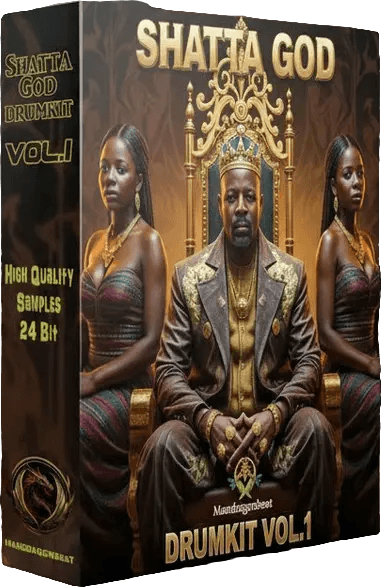
Treat them as two dialects of one rhythmic language. Master the shared skeleton, then commit to the sound design of the lane you serve. For the deeper Shatta story, read why Shatta is Dancehall’s next generation — and when you build, the Shatta God Drumkit Vol.1 carries the exact aggression the Antillean side demands.
FAQ
Is Shatta just French Dancehall?
No — Shatta is a distinct genre that descends from Dancehall but adds Bouyon energy, bass-music sound design and Antillean Creole culture. Calling it French Dancehall undersells what changed.
Can a Dancehall producer switch to Shatta easily?
The rhythmic instincts transfer, which helps. The adjustment is in sound design (more saturation, more aggression) and arrangement (more minimal, more drop-driven).
Do Shatta and Dancehall share BPM ranges?
Largely yes — both live around 95-105 BPM, which is why DJs blend them seamlessly. The difference is feel and sound, not speed.
Which should I learn first as a producer?
Learning classic Dancehall riddim culture first gives you the roots; Shatta then makes sense as the evolution. But starting directly with Shatta works if that is the scene you serve.
Same family, different houses — and both are worth visiting with your DAW open.